 Loading...
| Jan 01, 1970 | Daily Report |
| RISING BHARAT | News Count (102145) | |
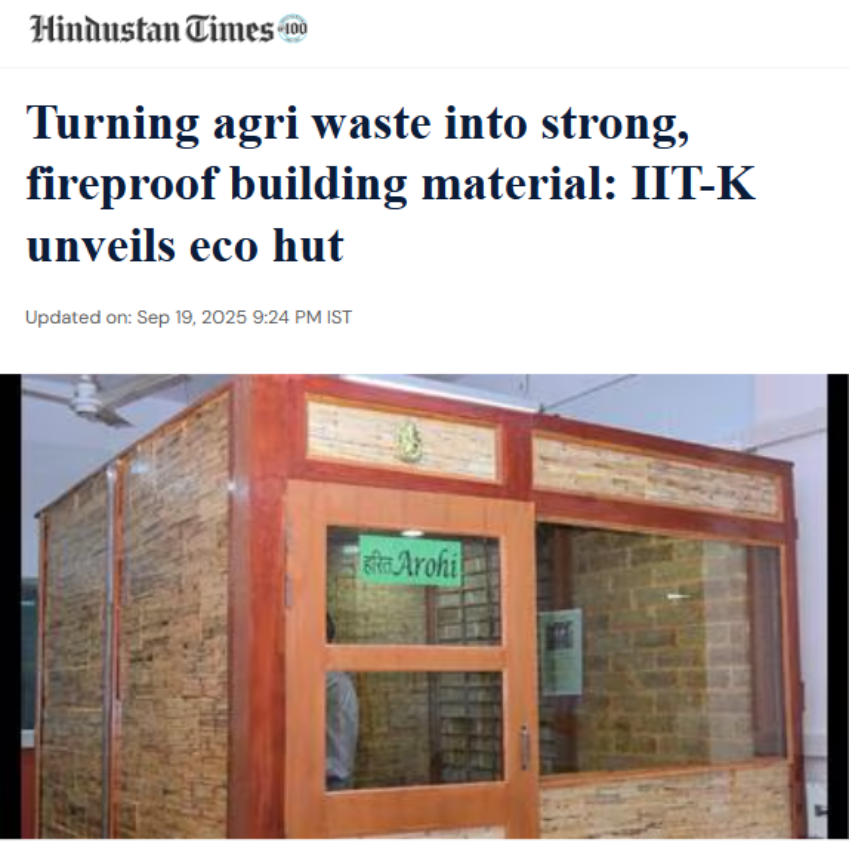

341. Turning agri waste into strong, fireproof building material: IIT-K unveils eco hut
- The Indian Institute of Technology, Kanpur (IIT-K), showcased an innovative eco hut built entirely with local wild cane grass and agricultural waste. Named as Harit Arohi Kutir, the product has superior compressive strength, fire resistance (tested up to 1100°C) and is a major step towards greener, resilient infrastructure for India and beyond.
- The team led by Deepak Kumar Maurya (who completed PhD from IIT-K) and guided by Prof CS Upadhyay envisions applications in low-rise buildings, toilets, resorts, and disaster-relief shelters, paving the way for a new paradigm in green construction.
- The genesis of this research work is rooted in a project of DRDO where researchers were working on low cost, light weight, blast and ballistic resistance sheets. And it was from there, we were searching for materials that are low cost, light weight, energy absorbing and carry load also.
- Innovative eco-bricks and sandwich panels were made from crop residue, lime, jaggery and lentils. The material is resistant to termites, moisture and weather effects and its load-bearing capacity supports up to 1300 kg — ideal for 2-3 storey structures, added Maurya.
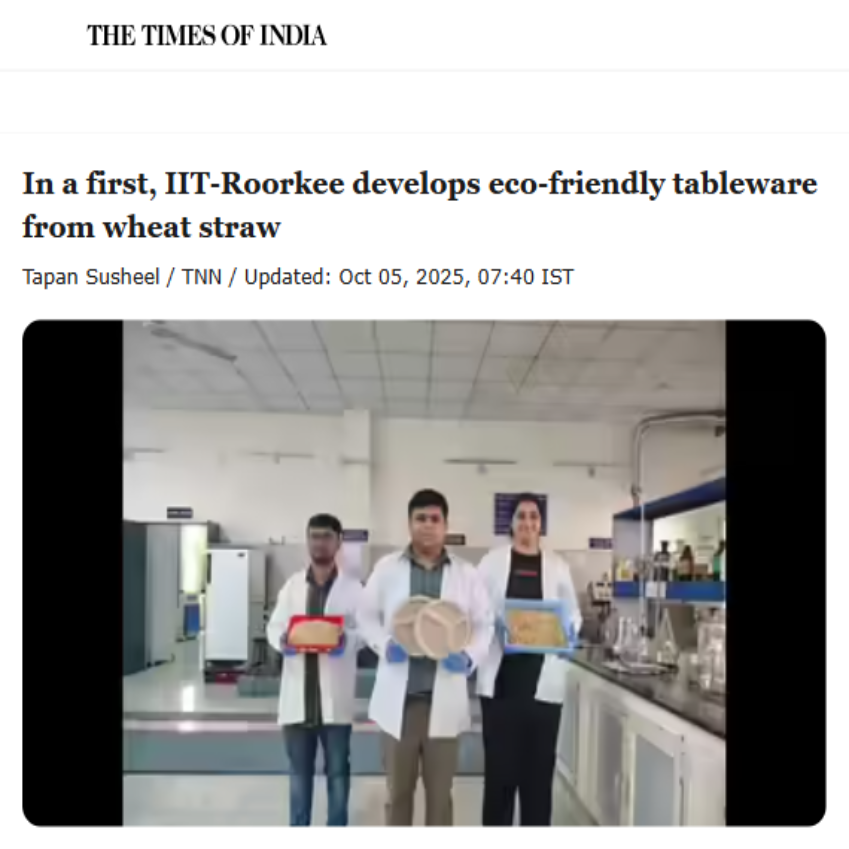
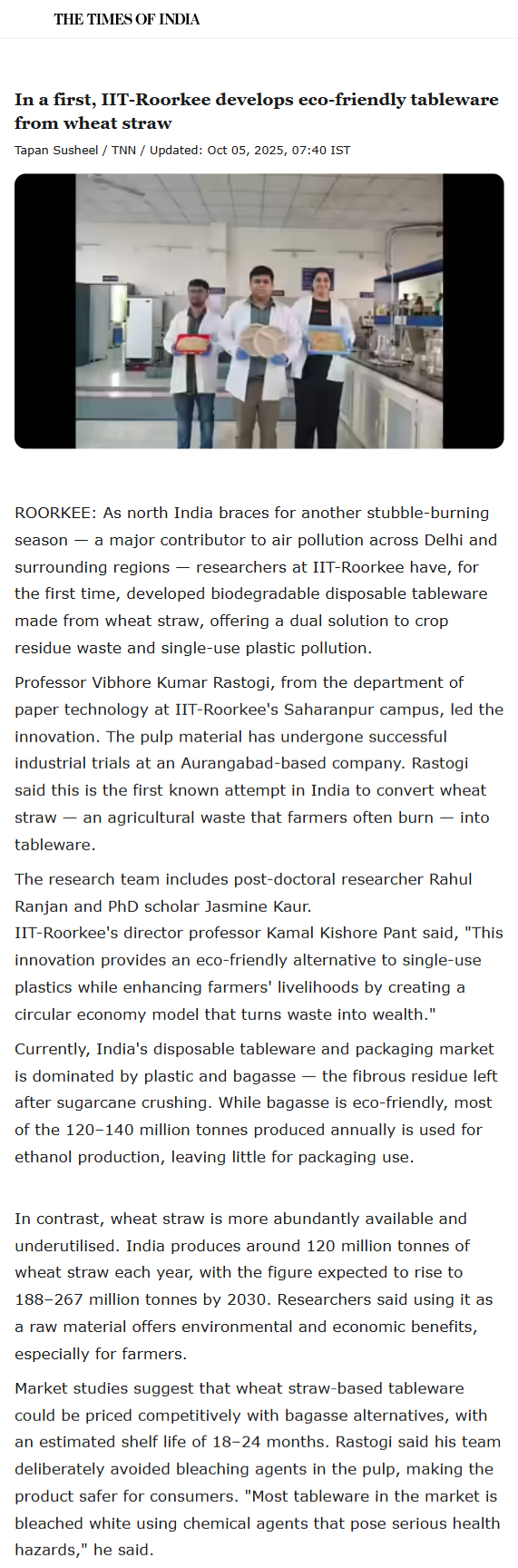
342. IIT Roorkee Developed Biodegradable Tableware from Wheat Straw
- As north India braces for another stubble-burning season — a major contributor to air pollution across Delhi and surrounding regions — researchers at IIT-Roorkee have, for the first time, developed biodegradable disposable tableware made from wheat straw, offering a dual solution to crop residue waste and single-use plastic pollution.
- Currently, India's disposable tableware and packaging market is dominated by plastic and bagasse — the fibrous residue left after sugarcane crushing. While bagasse is eco-friendly, most of the 120–140 million tonnes produced annually is used for ethanol production, leaving little for packaging use.
- In contrast, wheat straw is more abundantly available and underutilised. India produces around 120 million tonnes of wheat straw each year, with the figure expected to rise to 188–267 million tonnes by 2030. Researchers said using it as a raw material offers environmental and economic benefits, especially for farmers.
- Wheat straw-based tableware could be priced competitively with bagasse alternatives, with an estimated shelf life of 18–24 months. Rastogi said his team deliberately avoided bleaching agents in the pulp, making the product safer for consumers.
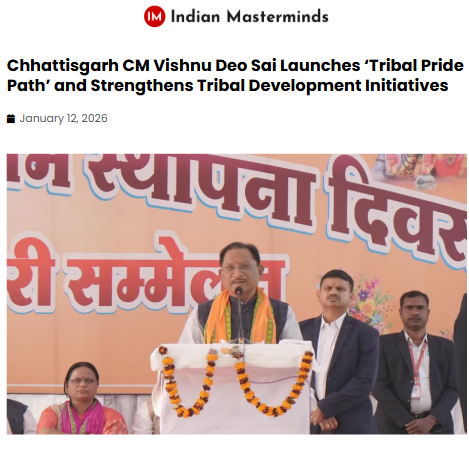
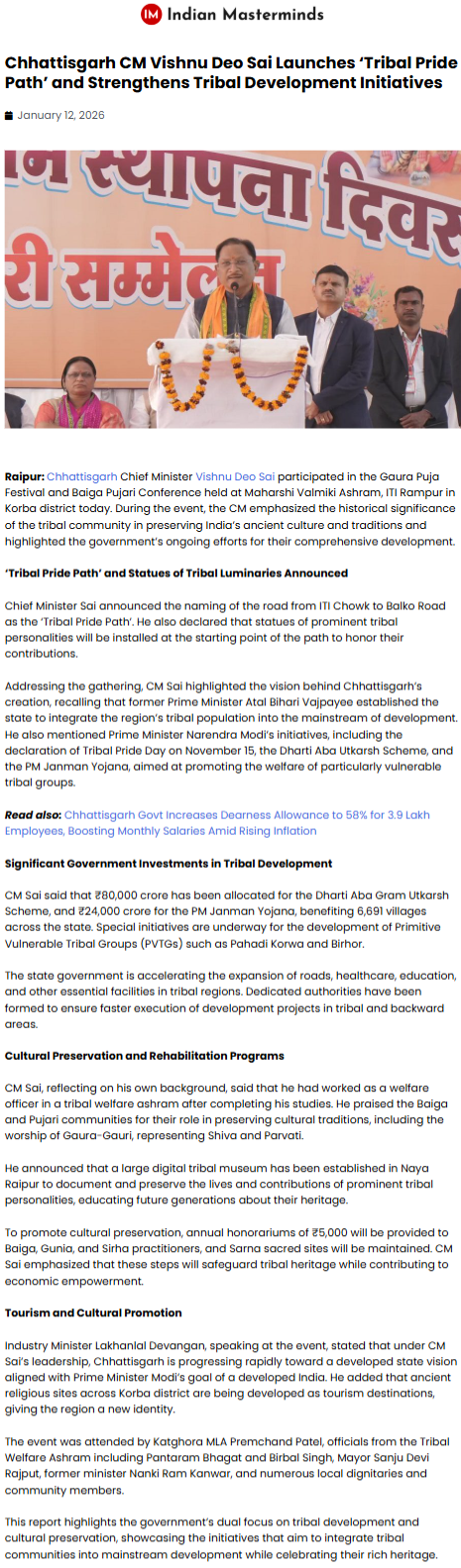
343. Chhattisgarh CM Vishnu Deo Sai Launches ‘Tribal Pride Path’ and Strengthens Tribal Development Initiatives
- On 12 January 2026, CM participated in the Gaura Puja Festival and Baiga Pujari Conference at Maharshi Valmiki Ashram, ITI Rampur, Korba district, Chhattisgarh, emphasizing tribal culture, development, and heritage preservation.
- CM Sai announced the ‘Tribal Pride Path’ road naming, installation of tribal luminary statues, and highlighted central and state schemes like Dharti Aba Gram Utkarsh Scheme and PM Janman Yojana to integrate tribal communities into mainstream development.
- ₹80,000 crore and ₹24,000 crore were allocated for tribal schemes benefiting 6,691 villages; focus included PVTGs, digital tribal museum in Naya Raipur, annual honorariums for traditional practitioners, tourism development, and preservation of Sarna sites.
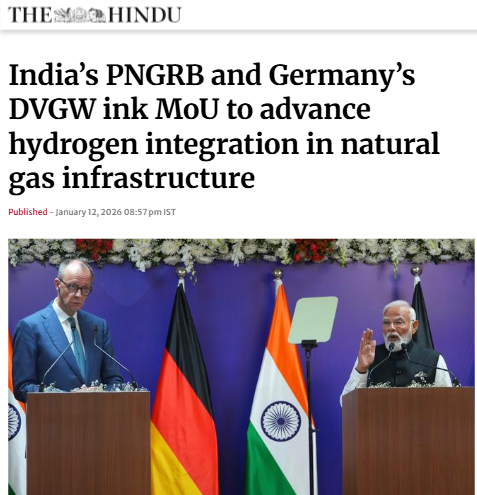
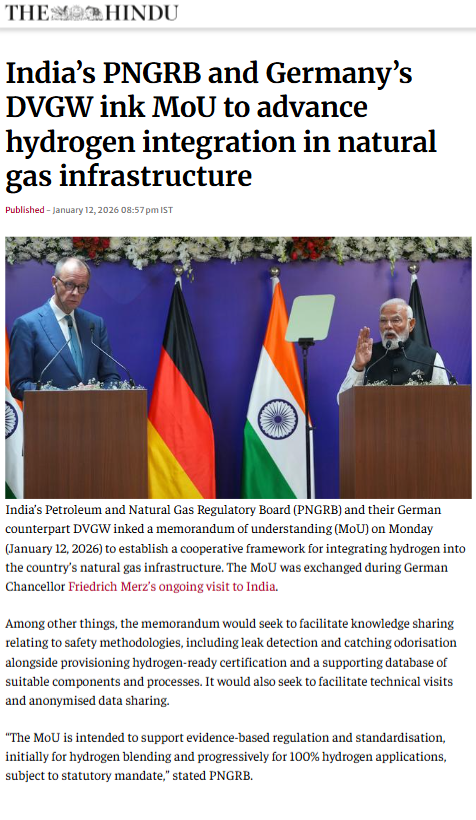
344. India’s PNGRB and Germany’s DVGW ink MoU to advance hydrogen integration in natural gas infrastructure
- On January 12, 2026, India’s Petroleum and Natural Gas Regulatory Board and Germany’s DVGW have signed an MoU on January 12, 2026, to integrate hydrogen into India’s natural gas infrastructure.
- India’s Petroleum and Natural Gas Regulatory Board and Germany’s DVGW have signed an MoU to integrate hydrogen into India’s natural gas infrastructure.
- India and Germany have partnered to make natural gas networks hydrogen-ready, enabling safe hydrogen blending and future clean-fuel use.
Click here to find 870 similar incidents of Indian Diplomacy -> Diplomatic Initiatives
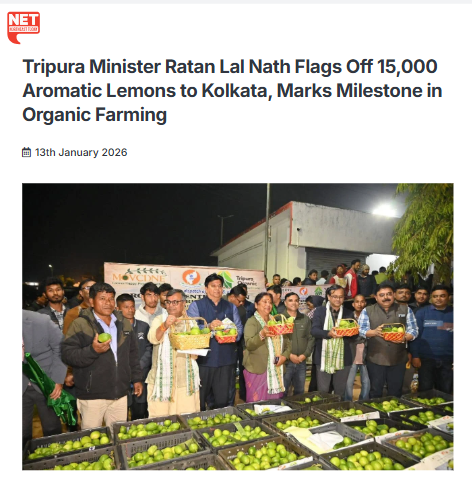
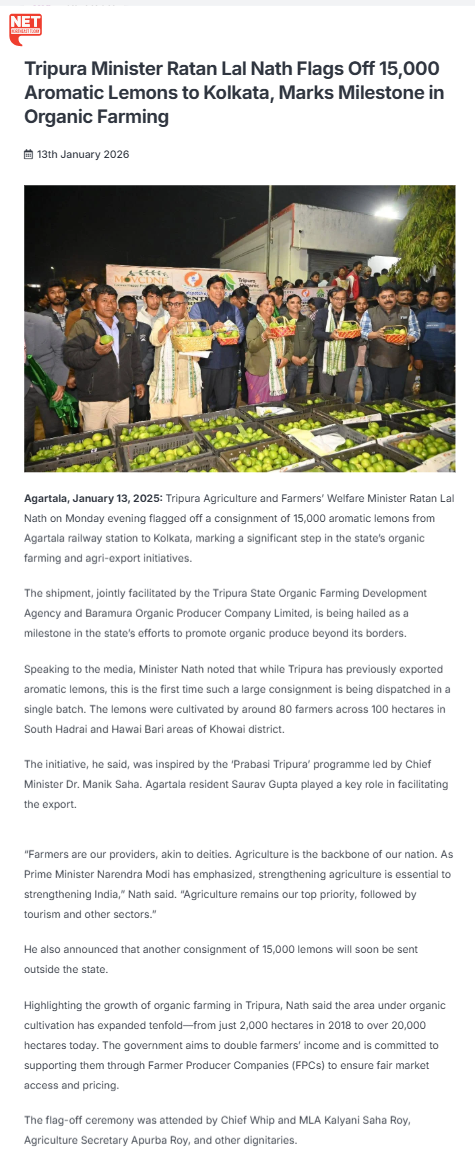
345. Tripura Minister Ratan Lal Nath Flags Off 15,000 Aromatic Lemons to Kolkata, Marks Milestone in Organic Farming
- On January 13, 2026, Tripura’s Agriculture and Farmers’ Welfare Minister flagged off a consignment of 15,000 organically grown aromatic/scented lemons from Agartala to Kolkata, showcasing the state’s expanding organic farming reach.
- The lemons were cultivated by around 80 farmers across about 100 hectares under organic methods, reflecting rapid growth in organic cultivation in the state.
- Tripura’s organic farming area has expanded dramatically in recent years, helping local growers access larger national markets like Kolkata and signalling rising demand for chemical-free agricultural products.
Click here to find 219 similar incidents of North East India -> Developments in North East India
346. Massive Healthcare Push Positions J&K As Emerging Medical Hub
- On January 13, 2026, Jammu & Kashmir is rapidly expanding its healthcare infrastructure with two new All India Institutes of Medical Sciences (AIIMS), 12 medical colleges, 17 critical care blocks, and over 3,000 wellness centres strengthening services from tertiary care to grassroots levels.
- The initiatives include not only hospitals and colleges, but also large plans for a 500-bed hospital with aged care facilities, hotel and residential services aimed at delivering wide-ranging healthcare support and improving overall patient experience.
- These efforts are part of a strategic push to transform J&K into a major medical hub, enhancing access to quality healthcare, reducing the need for long-distance travel for treatment, and attracting patients from surrounding regions.
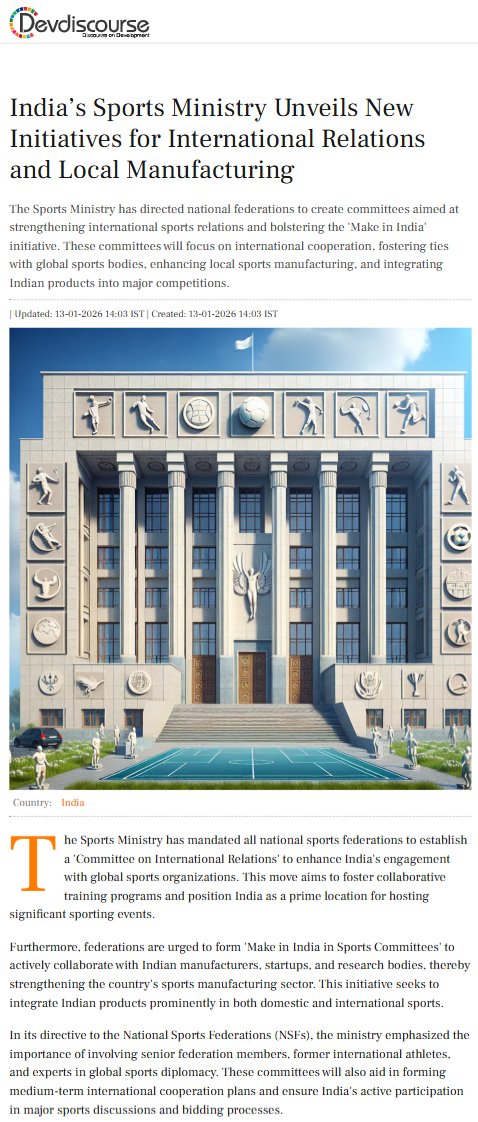
347. India’s Sports Ministry Unveils New Initiatives for International Relations and Local Manufacturing
- On January 13, 2026, The Ministry of Youth Affairs & Sports has directed all National Sports Federations (NSFs) to form ‘Committees on International Relations’ to enhance cooperation with international sports bodies, foster joint training, and support India’s participation in global events.
- NSFs are also asked to set up ‘Make in India in Sports Committees’ to work with Indian manufacturers, startups and research institutions to promote locally made sporting goods and technology, aligned with the Make in India and Atmanirbhar Bharat goals.
- These initiatives aim to upgrade the sports ecosystem by improving international engagement, helping host major events in India, facilitating access to global best practices, and strengthening the domestic sports manufacturing base
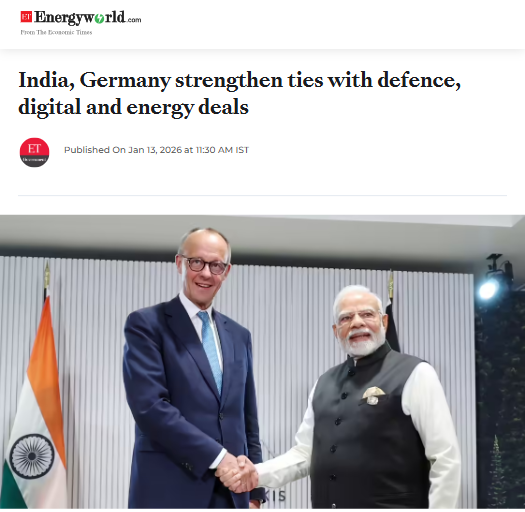
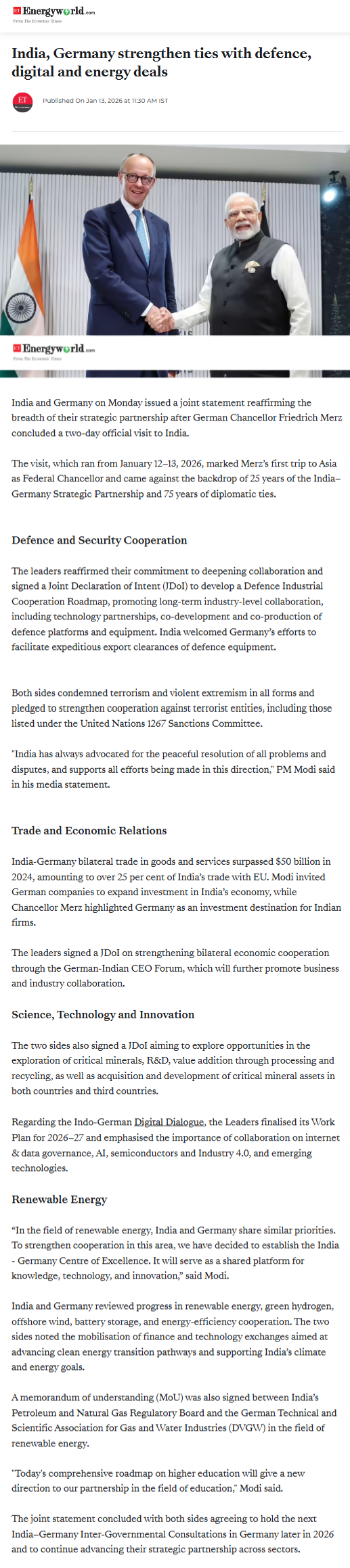
348. India, Germany strengthen ties with defence, digital and energy deals
- On January 13, 2026, India and Germany strengthened their strategic partnership by signing a series of agreements covering defence, digital collaboration, energy transition, and broader economic cooperation during German Chancellor Friedrich Merz’s visit to India.
- The two countries signed a Joint Declaration of Intent (JDoI) to develop a Defence Industrial Cooperation Roadmap — supporting long-term collaboration in technology, co-development and co-production of defence platforms and equipment.
- Both sides finalised a digital dialogue work plan for 2025–27 aimed at boosting cooperation in internet governance, AI and Industry 4.0 tech.
Click here to find 870 similar incidents of Indian Diplomacy -> Diplomatic Initiatives
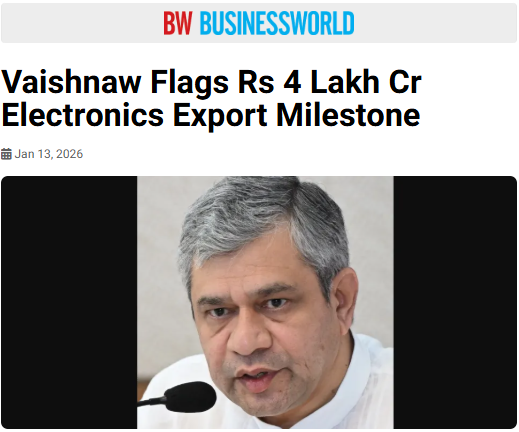
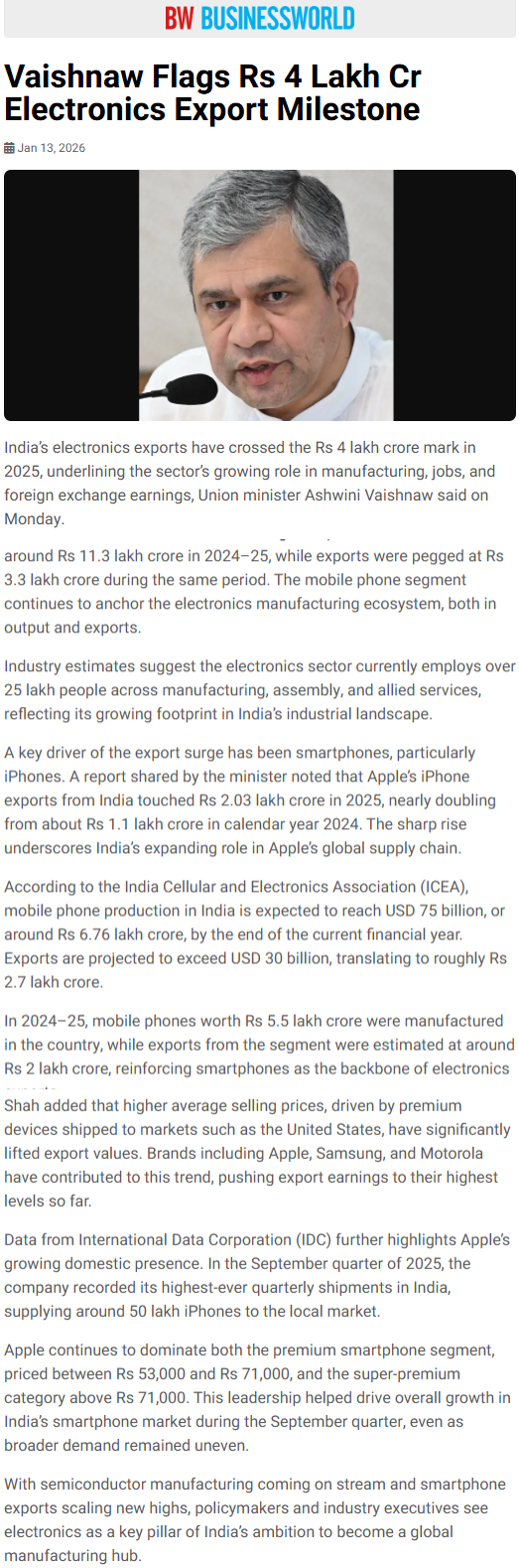
349. Vaishnaw Flags Rs 4 Lakh Cr Electronics Export Milestone
- On January 13, 2026, India’s electronics exports exceeded ₹4 lakh crore in 2025, marking a major achievement for the sector and reflecting strong global demand.
- The export momentum is expected to continue into 2026, especially as four semiconductor manufacturing plants begin commercial production this year, strengthening India’s position in global electronics and chip markets.
- This surge in exports has helped create jobs and bring in foreign exchange, underscoring the broader economic benefits of expanding the electronics manufacturing and export ecosystem.
Click here to find 860 similar incidents of Bharat Economic Growth -> Increasing Exports
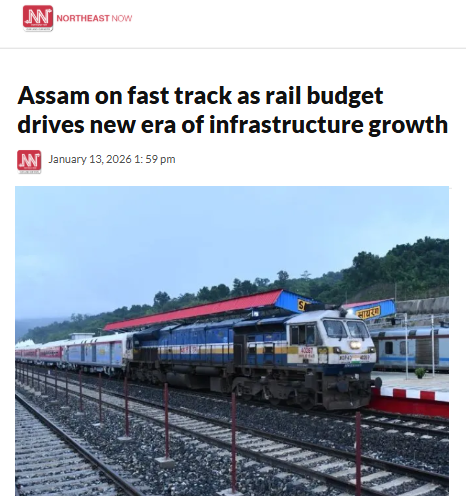
350. Assam on fast track as rail budget drives new era of infrastructure growth
- On January 13, 2026, The latest rail budget has significantly increased funding for Assam, accelerating projects related to new railway lines, doubling of tracks, electrification, and station redevelopment under Indian Railways.
- Enhanced rail infrastructure is strengthening connectivity within Assam and with the rest of India. Modern signalling systems, upgraded stations, and better passenger amenities are central to this transformation.
- Faster rail expansion is expected to support trade, tourism, and employment in the Northeast, positioning Assam as a key logistics and transport hub while contributing to long-term regional economic growth.
Click here to find 759 similar incidents of North East India -> Infrastructure Development